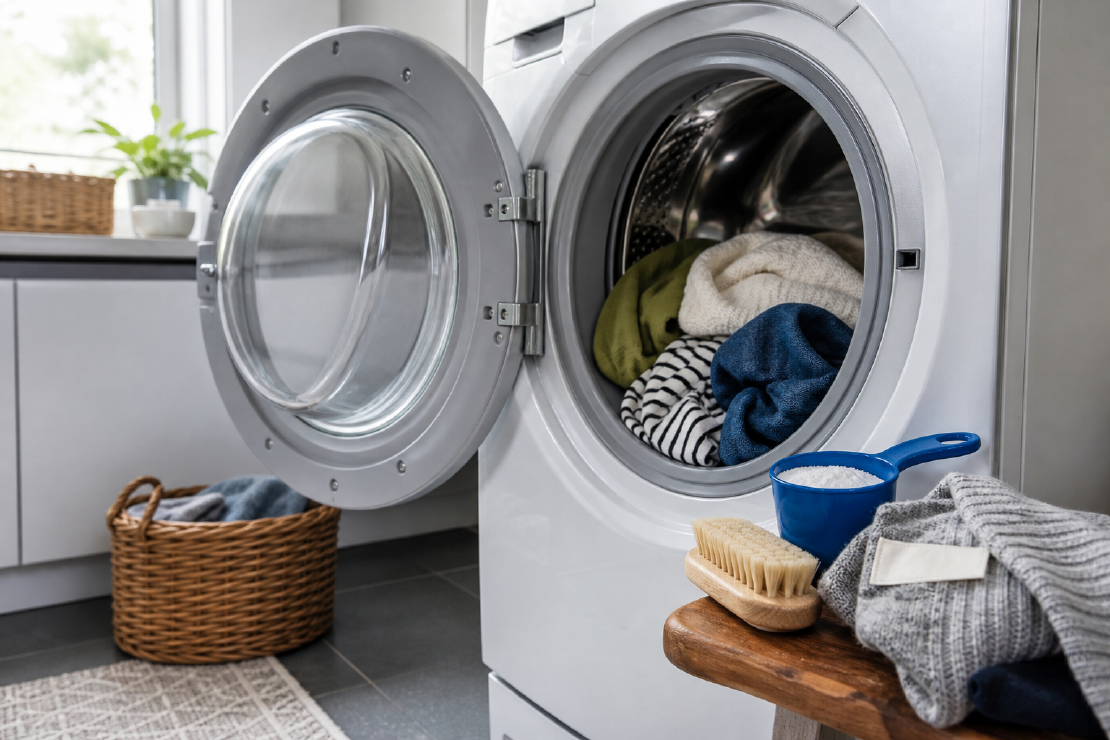
Cold water is a sensible default for ordinary laundry, but it is not suitable for every fabric, stain or hygiene requirement.
Heating wash water uses energy, and the US Department of Energy recommends cold-water detergent and cold washing whenever possible. The useful part is “whenever possible”: care labels, stains, hygiene requirements and machine design still matter.
Use cold for normal, lightly soiled clothes
Cold washing is generally well suited to:
- everyday shirts, trousers and underwear without special hygiene needs;
- dark and bright colours prone to fading;
- synthetic sportswear when the care label permits it;
- mixed loads that are dirty from normal wear rather than grease or contamination;
- clothes washed promptly rather than left damp for days.
Use a detergent designed to work in cold water and dose it for water hardness, load size and soil. More detergent is not more cleaning. Excess can remain in fabric and the machine.
Sort by the problem, not only the colour
Separate items that need different treatment:
- greasy work clothes;
- heavily muddied kit;
- delicate fabrics;
- items shedding lint;
- bedding or laundry with a specific hygiene requirement;
- clothes with fasteners that can damage lighter fabric.
One overloaded “eco” load containing every fabric and stain is not efficient if half the clothes need washing again.
Treat stains before the machine
Temperature is a crude way to attack a local problem. Pre-treatment is often better.
- Check the care label.
- Act before the stain dries where practical.
- Use an appropriate stain treatment on the affected area.
- Test colourfastness on an inconspicuous spot.
- Do not machine-dry the item until the stain is gone; heat can make some stains harder to remove.
Protein stains can react badly to heat. Grease may need a suitable detergent and warmer conditions. There is no single temperature rule for every stain.
When warmer washing is justified
Use the temperature required by the fabric instructions, detergent and hygiene situation. Examples may include:
- laundry used during certain illnesses;
- reusable hygiene products;
- heavily greasy items;
- a household member’s clinically advised infection-control routine;
- a machine-cleaning cycle specified by the manufacturer.
Do not improvise medical laundry advice from a sustainability article. For infection risks, follow public-health or clinical guidance relevant to the situation.
Choose the cycle from the actual problem
| What is in the load? | Sensible first step | What decides the cycle? |
|---|---|---|
| Ordinary, lightly soiled clothes | Cold wash | Care label and cold-water detergent instructions |
| A local food or drink stain | Pre-treat before washing | Fabric and stain-treatment instructions |
| Grease or heavy soil | Separate the load and pre-treat | Care label, detergent directions and machine options |
| Delicate or colour-sensitive fabric | Use the specified gentle process | Care label |
| Illness or a defined hygiene risk | Keep separate if guidance requires it | Relevant public-health, clinical or manufacturer guidance |
| Towels or bedding without a special hygiene need | Avoid overloading; choose a complete cycle | Care label and machine capacity |
The table deliberately gives no universal temperature for hygiene or stains. The correct requirement depends on the material, product and risk involved.
The dryer can dominate the decision
Saving energy in the wash and then running a long high-heat dryer cycle is an incomplete plan.
Where practical:
- use a high spin speed suitable for the fabric;
- air-dry some or all of the load;
- clean lint filters;
- avoid mixing heavy towels with quick-drying synthetics;
- use moisture sensing rather than a needlessly long timed cycle;
- consider a heat-pump dryer when replacing a failed machine and the cost, climate and drying habits justify it.
The Department of Energy states that ENERGY STAR heat-pump dryers can use substantially less energy than conventional dryers. That does not mean discarding a working machine creates an automatic environmental win.
Full does not mean packed solid
Run useful loads, but leave enough room for clothes to move as the machine requires. Overloading reduces mechanical action and rinsing. Underloading wastes cycles.
Read the machine’s capacity guidance. A “full load” of dense towels is not the same volume as a full load of lightweight shirts.
Keep the machine clean
Low-temperature washing can contribute to odour or residue when combined with overdosing, poor drainage and a permanently closed damp machine.
Helpful habits:
- use the correct detergent amount;
- remove washed clothes promptly;
- let the drum and seals dry where the manufacturer permits;
- clean filters and dispensers;
- run the specified maintenance cycle;
- inspect seals rather than covering odour with fragrance.
A practical rule
Start cold. Change the process only for a reason: the care label, a stain, heavy soil, hygiene guidance or a machine requirement.
The most efficient cycle is the one that cleans the clothes properly, avoids unnecessary heat and helps the fabric last. A cycle that requires a second wash has not saved energy.