Hot-weather training is not the day to prove that a normal pace can be forced through any condition. Heat adds work. A slower session can be the correct session even when fitness has not changed.
If you feel faint or weak, stop and move to a cool place. The CDC states this directly. Do not turn a warning sign into a motivation exercise.
Change the objective before starting
Decide whether the session is for fitness, heat acclimatization, race preparation or simply maintaining a routine. Then adjust it before leaving.
Options include:
- moving the session to early morning or later evening;
- reducing duration;
- replacing intervals with easy work;
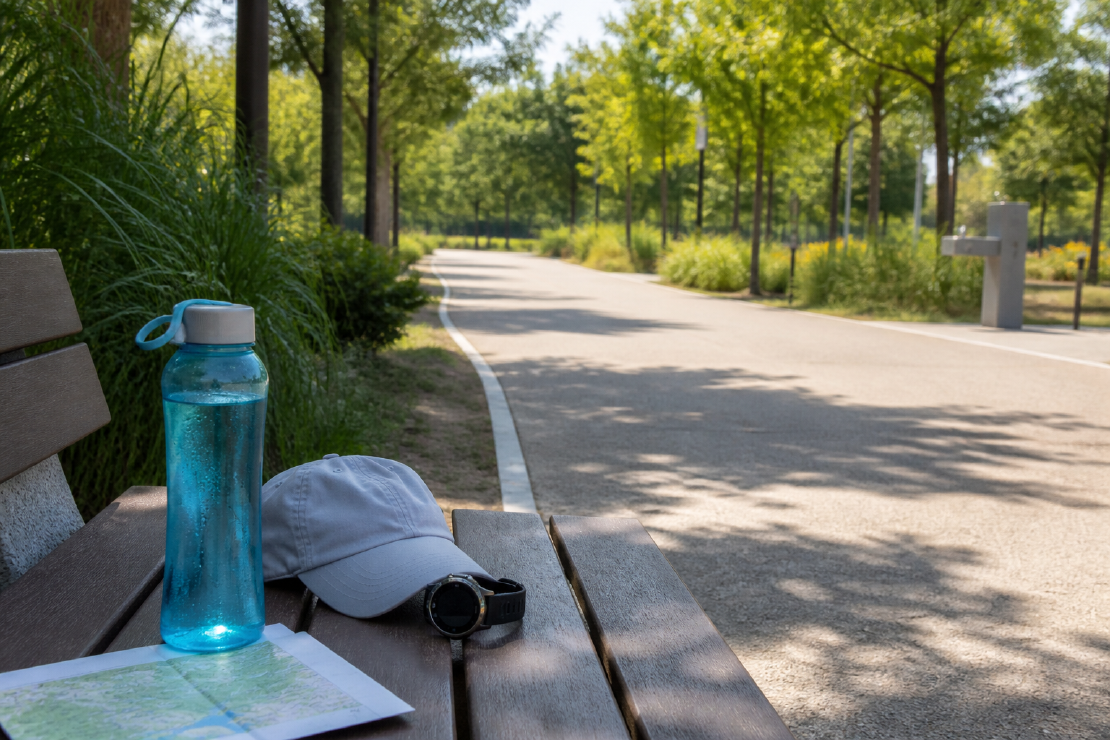
- choosing a shaded route;
- moving indoors;
- carrying water or planning reliable refill points;
- cancelling when conditions and personal risk make that the sensible choice.
A route without shade, water or an easy exit requires a specific heat plan before the session begins.
Make the decision before the warm-up
| Check | Continue as planned | Change the session | Do not start / seek advice |
|---|---|---|---|
| Conditions | Familiar heat with shade and water available | Hotter or more humid than recent training | Official warning, unsafe air quality or no viable exit |
| Recent exposure | Already training comfortably in similar weather | First hot days after cooler conditions | Recent heat illness or unresolved symptoms |
| Current health | Well, rested and normally hydrated | Poor sleep, unusual fatigue or mild illness | Fever, vomiting, faintness, confusion or medical restriction |
| Route | Short loops, shade, water and phone coverage | Longer gaps between exits or refills | Remote route with no practical support |
| Session goal | Easy, adjustable work | Hard session that can move indoors or to another time | Fixed pace despite worsening symptoms |
Medication and medical conditions can change heat risk. Where that applies, use individual advice from a clinician or pharmacist rather than a generic table.
Pace is an output
In heat, use effort rather than normal-weather pace. Heart rate and perceived effort can rise even when speed falls. Chasing the usual number encourages the session to become harder than intended.
For an easy run or ride, use perceived effort and physical warning signs rather than trying to preserve a normal-weather pace. Slowing down or adding walking can keep the original training purpose intact.
Acclimatization is gradual
Repeated exposure can improve tolerance, but that is not permission to begin with the hardest session at the hottest time. Start with shorter, easier exposure and increase only when recovery remains normal.
Recent travel from a cool climate, illness, poor sleep, alcohol, some medications and previous heat problems can reduce tolerance. Individual risk matters more than what a training partner handled last week.
Plan hydration for the conditions
The CDC advises drinking more water than usual in hot conditions and not waiting until thirst becomes intense. That does not require turning every short session into a supplement routine.
Plan from:
- session length;
- temperature and humidity;
- access to water;
- personal sweat rate;
- whether the session starts well hydrated;
- how soon normal food and drink are available afterward.
Long sessions and heavy sweating may require attention to electrolytes, but more is not automatically safer. Excessive fluid intake can also be dangerous. For medical conditions or medication that affects fluid balance, get individual clinical advice.
Clothing and route choices
Wear loose, lightweight, light-coloured clothing where practical. Use sun protection appropriate to the exposure. Choose loops or routes with exits instead of committing to a remote out-and-back.
On a team session, check other people rather than assuming everyone will announce a problem. Confusion can be a sign that someone is no longer making good decisions for themselves.
Stop signs
End the session and get to a cooler place for symptoms such as:
- faintness or unusual weakness;
- confusion;
- loss of coordination;
- severe headache;
- nausea or vomiting;
- chills or goosebumps despite heat;
- cramps that persist or worsen;
- an abnormal feeling that does not improve after slowing.
Seek urgent medical help for suspected heat stroke or severe symptoms. Cooling and professional help matter more than finishing the route.
A practical adjustment table
| Situation | Better decision |
|---|---|
| Easy session, unusually hot day | Slow down, shorten, use shade |
| Hard intervals with no heat-specific goal | Move time or location |
| First hot week of the year | Reduce load and adapt gradually |
| Remote route without water | Change route or carry enough |
| Faintness, weakness or confusion | Stop, cool down, get help |
| Race in expected heat | Practise a measured heat strategy beforehand |
After the session
Cool down, replace fluids reasonably, eat normally and note whether recovery is worse than expected. A headache, unusual fatigue, nausea or disturbed sleep can show that the session cost more than planned.
The next day’s training is part of the decision. If recovery is substantially worse than expected, reduce the next session and review what made the heat exposure harder to manage.